Skims’ India Entry With Reliance Brands: Why Global Brands Are Betting on the Indian Retail Industry?
September 2, 2026

September 2, 2026
Quick Summary:
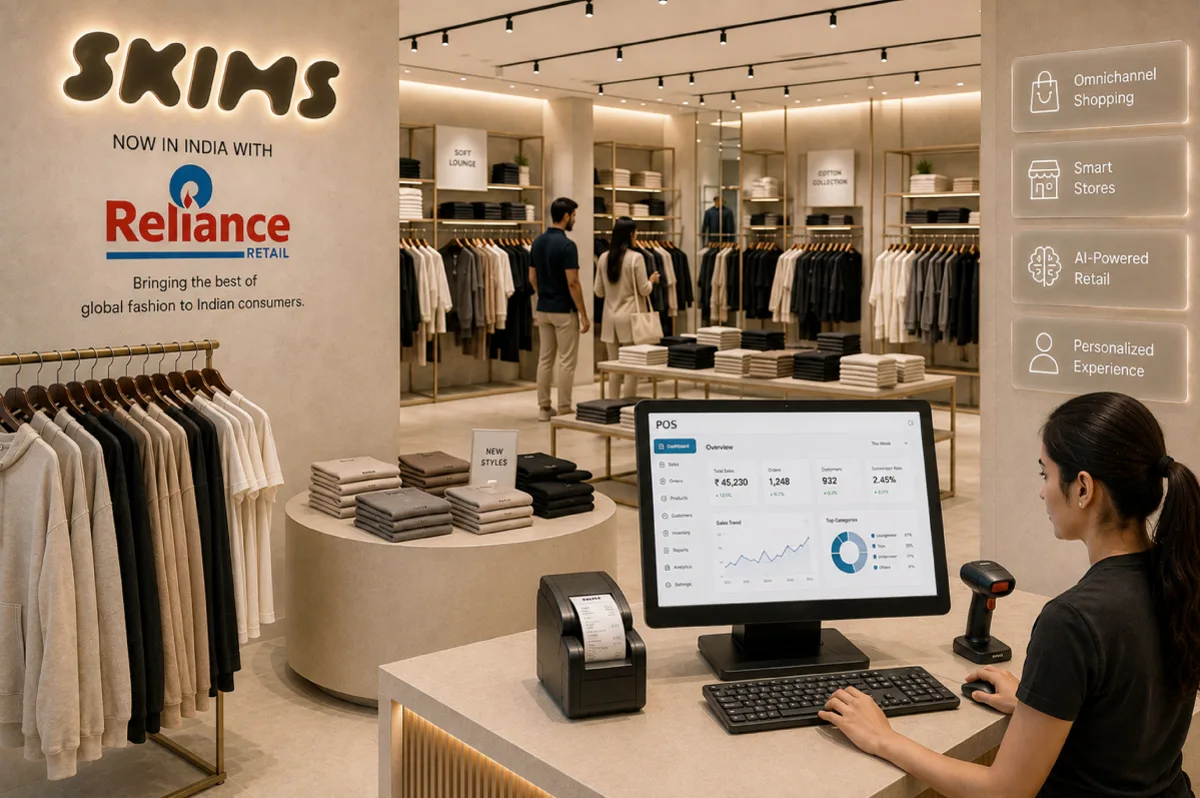
Kim Kardashian's shapewear brand Skims has entered India through an exclusive partnership with Reliance Brands. The initial two flagship stores are planned in Delhi and Mumbai. The deal is the latest in a fast-growing list of global brands choosing the Indian retail market as their global destination for expansion. So, what has changed in the Indian retail landscape? Why does it appear so lucrative suddenly, even for globally iconic brands? This article reflects on the implications of what the Skims-Reliance Brands deal tells about the Indian retail industry and how India's own retail industry has grown sharper with smart retail technology and AI intelligence.
Kim Kardashian’s shapewear label Skims is one of the globally iconic brands in the fashion retail industry. It has entered an exclusive partnership with Reliance Brands, the luxury retail arm of Reliance Retail. As we see this news in the context of the Indian retail industry, it reveals a big shift in perception regarding the Indian retail industry.
The news also implies how dominant the Indian retail sector is becoming as our home-grown retail chains are partnering with international brands. Something fundamental has changed. Even our retailers have become smarter. The Indian retail industry is headed towards global dominance.
Let’s discuss the multiple implications this news has on the Indian retail industry.
Skims was co-founded by Kim Kardashian and Jens Grede in 2019. The brand has built a global reputation in shapewear, underwear, and loungewear for women. The company raised $225 million at a $5 billion valuation in 2025.
In 2026, Skims opened a flagship store in London in a whopping 12,000-square-foot space. The company’s expansion plans got a further boost with the opening of its flagship store in the Dubai Mall in July 2026.
Skims now plans to open its flagship stores in India. (news: The Hindu).
Its planned India entry after flagship stores in London and Dubai reveals how Indian retail is now among the top shopping arenas globally. Skims has chosen Reliance Brands Limited for its official entry into the Indian market. Reliance Brands Limited (RBL), a subsidiary of Reliance Retail Ventures, has signed an exclusive, long-term agreement to bring Skims to India.
Under the deal, RBL will operate the brand in an omnichannel way. Skims products will be available across both physical stores and digital channels operated by RBL. Two flagship stores in Delhi and Mumbai are planned before expanding to more cities.
“SKIMS has changed how the world thinks about shape, comfort and inclusivity, and it speaks directly to a new generation of Indian consumers who want fashion that is both aspirational and made for them. We are proud to introduce SKIMS to India and to build it here for the long term.”
Isha Ambani
Director, Reliance Retail Ventures Limited.
(Source: Money Control).
“Reliance Brands has an exceptional track record of building some of the world’s leading fashion and lifestyle brands in India,” said Jens Grede, Co-Founder & CEO, SKIMS. (Fibre2Fashion):
Jens Grede has stated that Skims will benefit from the extensive retail experience that Reliance Brands possesses. RBL, which already operates stores for 85 international brands in India, is the right partner for Skims’ India expansion plans.
RBL already has some international brand names in its portfolio, including Hugo Boss, Tiffany & Co., Burberry, Valentino, and Rihanna’s Fenty Beauty and Fenty Skin. Skims joins the league.
Against this backdrop, now the real question emerges: why are global brands betting big on India and its retail industry? What makes these high-end fashion brands and ultra-luxury houses come to Indian retail’s doorstep?
Skims isn’t making a random bet. The numbers behind India’s retail industry have changed, and now they look extremely lucrative to outsiders.
Let’s discuss what makes global brands line up in India.
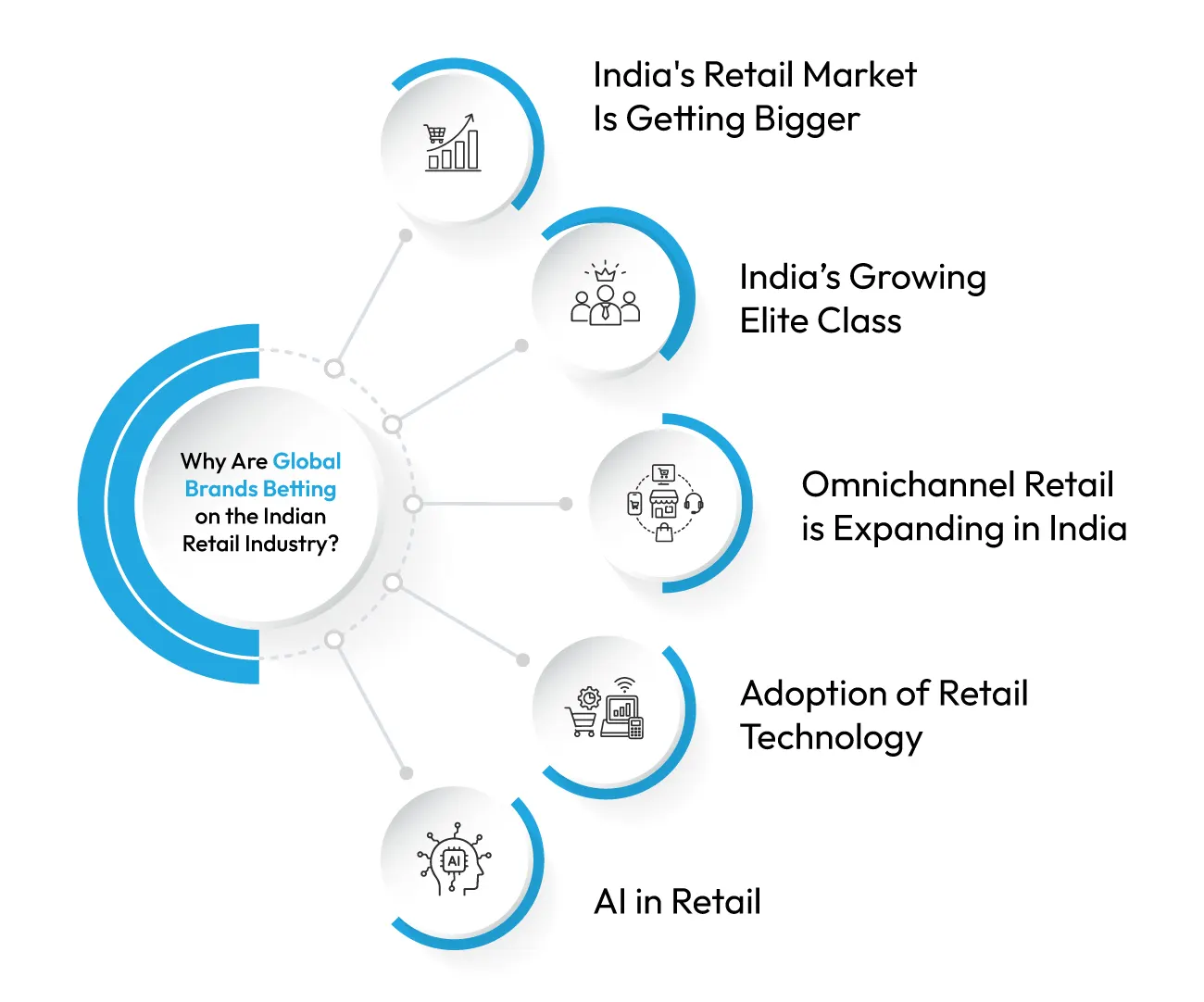
India is a compound growth story when it comes to fashion retail. The Indian Fashion Retail Market alone is expected to become a 100+ billion industry by 2030. A market report provides the estimated figure at 124.32 billion US dollars by 2030. That’s a growth at an impressive CAGR of 12.87%. So, why wouldn’t global fashion brands want to become a part of this growth story?
The luxury fashion industry in India, which once remained dominated by the affluent living in the metro cities of India, has now added a new consumer base to its portfolio. Today, the consumer base has expanded beyond metro cities to tier 2 and tier 3 cities too.
Organized and branded retail now serves over 100 million consumers as per the IBEF retail report. Rising incomes, social class affluence, better access to global fashion trends, and aspirational Indian youth are factors contributing to the retail growth story in India.
Retail, once completely dominated by brick-and-mortar stores, now offers equal opportunity through e-commerce formats too. Major platforms like Ajio, Myntra, Nykaa, Amazon, and Tata Cliq have expanded retail to accommodate the needs of digital consumers too. This widens the scope for global brands.
The omnichannel entry plans of Skims point to the fact that even global brands don’t want to depend only on the physical store model. E-commerce creates a broader market and retail consumer base for them.
As India is among the early countries that have transitioned to a digital economy by adopting online channels along with physical retail, global brands know that the risks are lowered even if they see lower footfalls in showrooms.
A very prominent factor behind the Indian retail industry’s unprecedented growth in the last few years is the adoption of retail technology by retailers, retail chains, and omnichannel retailers. We go to shopping malls in India or standard retail stores in cities, and we see smart POS for billing, advanced displays, no-queue billing counters, well-organized inventory, and well-trained staff to cater to affluent shoppers.
The shopping ethics, etiquette, and experience have changed. Retail technology is behind this transition. Retail POS systems help Indian retailers meet global benchmarks in the in-store shopping experience. These systems free retailers from manual management of retail activities and allow them to focus on shopper experiences. Shoppers who purchase global fashion labels are elite and demand premium shopping experiences. The retail tech advancements help retailers deliver them seamlessly.
Retail technology in India is already empowered by top POS software providers and developers. The integrated modules for accounting, CRM, inventory, customer experience, and supplier management have been in place in the retail technology stream for over a decade now. What’s the latest addition is how retail software companies have added AI-led competencies in their software solutions.
Personal recommendation engines powered by AI, business decision-making by AI analytics, and AI chatbots in retail are making waves in Indian retail. Such technological excellence appeals to global brands that now see Indian retail as technologically advanced.
For instance, the latest launch of vina, an AI-powered business assistant that directly integrates with the retail software’s dashboard, is the latest innovation by Vasy.
vina Takes AI in Retail to the Next Level!
The Intelligence Layer Inside Vasy vina isn’t a separate dashboard you have to open and interpret. It’s built into Vasy’s business management platform. For instance, reports and analytics on Vasy’s retail POS system were previously created to help businesses make key business decisions using data-driven insights derived from these reports.
However, the limitation with MIS reports is that they are ‘reports’ and not ‘direct answers’.
For instance, retailers can pull out an inventory report from their ERP system, but they have to read, analyze, and act on it as per their understanding of the report. This consumes time. Busy retailers don’t have time to read lengthy reports or sift through data tables to take next steps for their business. This is where vina solves everything. It reads, analyzes, and interprets the business for retailers.
Ask it which brand sells the most at your Mumbai fashion store or which size you should order for better sales of a particular garment, and vina answers in seconds.
Skims is not an isolated case. Global brands across fashion, beauty, athletics, and quick-service dining are launching new outlets, flagship stores, franchise stores, and online stores in India. The pattern is consistent in India’s organized retail, which is currently booming.
These brands are not from one country but include the USA, Germany, the UK, China, Spain, Italy, France, Denmark, and Australia. Most brands plan to enter via the partnership model with already established retail houses.
It’s a market that brands plan for early entry.
Skims won’t be the last global name to walk through the Indian retail door. Many international labels, fashion brands, and other retail businesses will follow. Other Indian retailers will also get such an opportunity to host an international brand themselves. The bar has been raised.
Even Indian shoppers now expect international standards in retail stores they visit. The demands for no-queue billing, mobile-based self-checkouts, smart shopping carts, and personalized shopping recommendations are now basic expectations in high-end retail.
Did You Know?
India now leads the global self-checkout system growth with a 15.1% CAGR. (Future Market Insights).
Shoppers who enter Tiffany or Skims showrooms will expect the same experience and speed at other retail stores too.
Long billing queues, no provision for mobile-based self-checkout, and poor omnichannel experience can be disastrous for retailers. Retailers cannot afford these mistakes if they want to beat competition and keep their customers loyal.
This is where smart retail becomes critical for growth and customer experience.
Indian retailers don’t need to reinvent their stores in an aesthetic way. They just need to put the right technology at the right touchpoints:
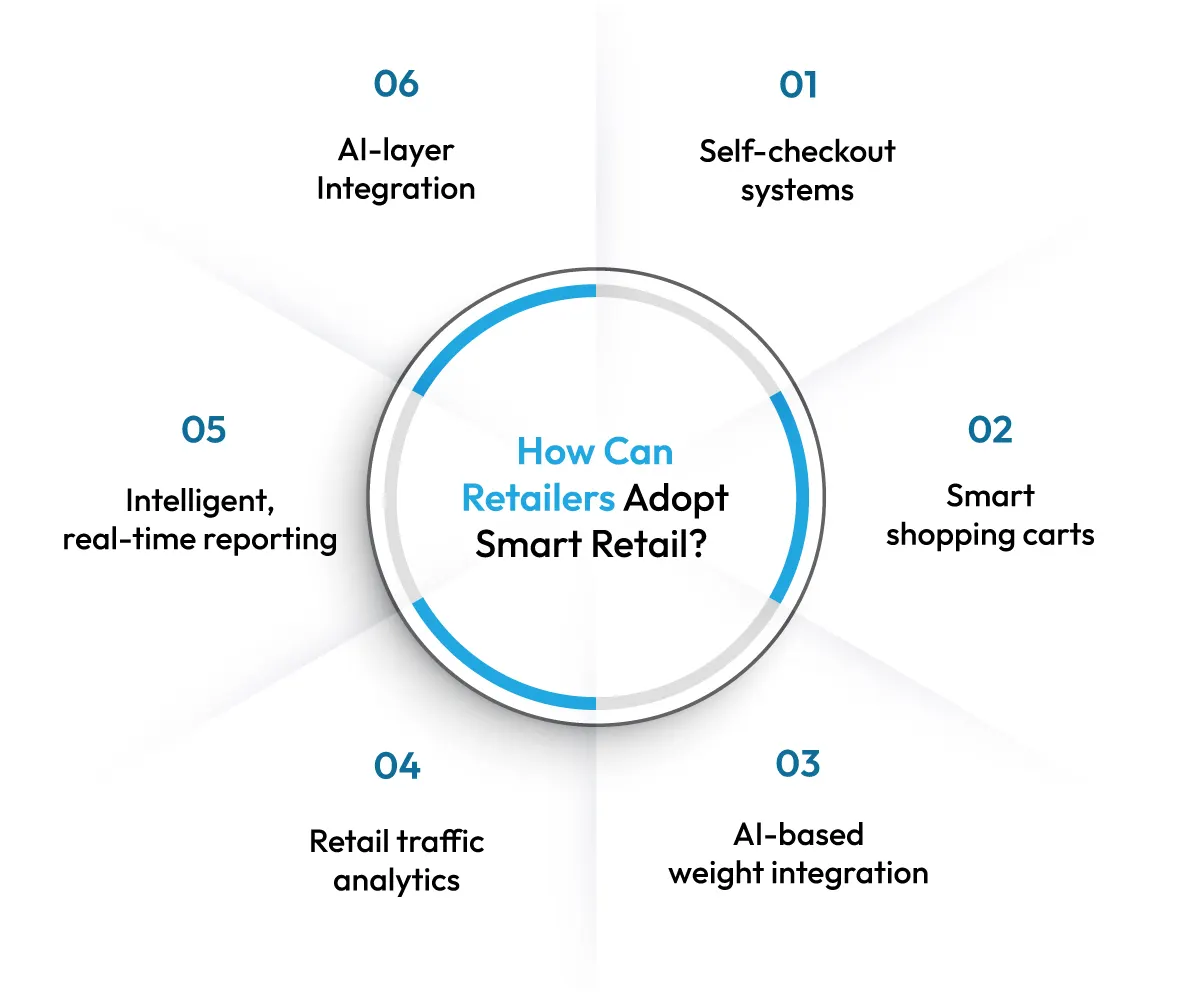
Platforms like Vasy’s smart retail solutions bring these capabilities together on one system.
Skims’ entry into India through Reliance Brands is not just a deal; it is a testament to how powerful, resilient, and lucrative the Indian retail sector has become. Global brands flocking to India means Indian retail is doing something right and unique.
What’s changed on India’s side is just as important: retailers here now run smarter, data-led retail operations. The experience inside the store has changed and has become immersive with smart retail technology.
Retail management systems such as Vasy provide all features and modules for smart retailers. For any retailer who wants to stay ahead in the industry, the real advantage lies in the systems running quietly behind the storefront.

This blog discusses how billing speed in retail influe...
December 18, 2025
Running a business with solid retail terminology will t...
March 21, 2024

September 3, 2026

September 2, 2026

August 21, 2026

August 18, 2026

July 30, 2026