Impact of Higher Fuel Prices on Businesses on Indian Businesses
September 3, 2026

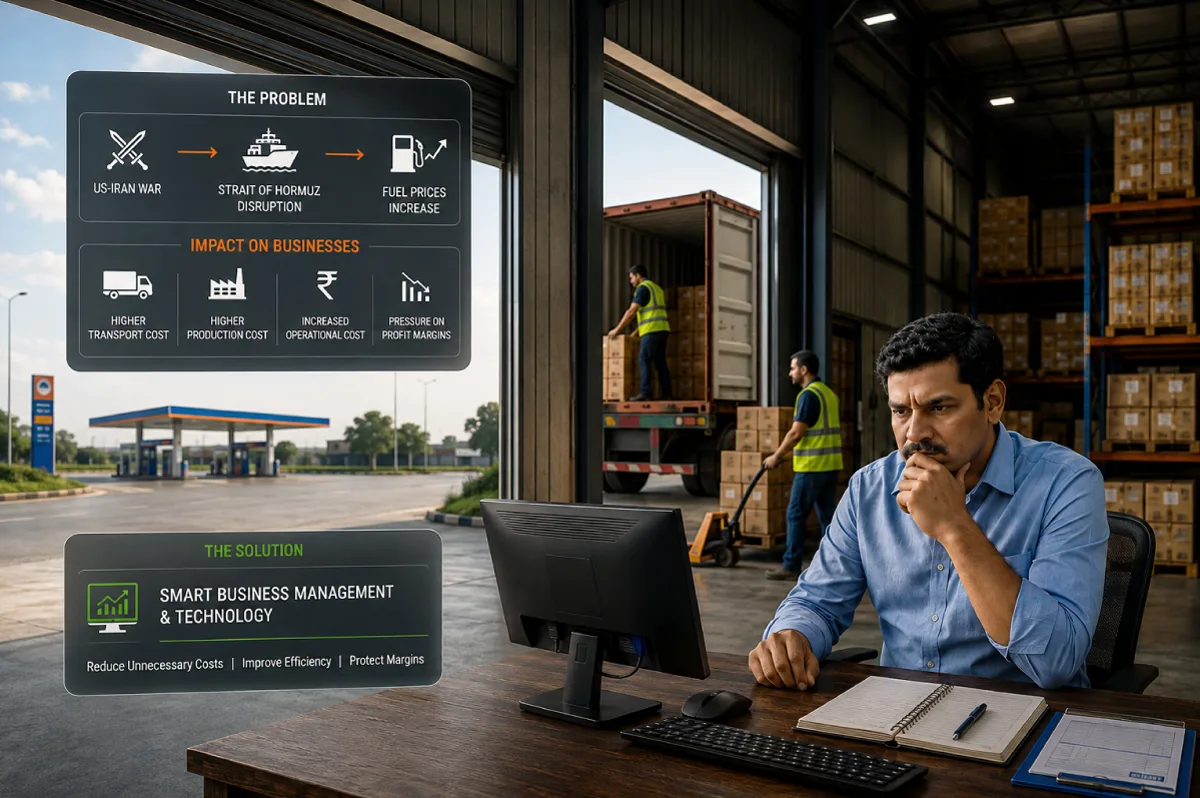
Quick Summary:The US-Iran war and the sudden closure of the Strait of Hormuz compelled the Indian government to increase fuel prices after four years freeze period on retail petrol/diesel prices. Currently, fuel prices are at their highest level since 2022. Such fuel price shocks affect consumers, markets, and businesses. It directly impacts operational and manufacturing costs and puts a strain on business margins. While no business, from retail, SMEs, and manufacturers to wholesalers, distributors, and e-commerce, can stay completely immune to fuel price-led losses, it can be minimized significantly with smart use of technology. This article explains how businesses can protect their margins by implementing smart business management tools that save them operational costs.
Businesses in India, especially manufacturers, retailers, and distributors, are heavily dependent on freight for their operations. Transport, logistics, and warehousing are critical for all businesses to keep their supply chains running. Inventory transit-related freight costs are a major operational expense, and therefore even a rupee increase in petrol/diesel costs can actually mean crores of rupees in extra burden for Indian businesses.
The final shelf price reflects that fuel price increase. In India, the prices of fuel are on an upward trajectory, and therefore, this article analyzes the impact of higher fuel prices on Indian businesses. This article also details how businesses can implement smart technology such as AI-powered business management software that can help them cut operational costs, resource costs, and employee costs and help them balance the adverse effects of the hiked fuel prices.
In major cities such as Bengaluru, Kolkata, and Mumbai, the petrol price on 28th August remained above INR 110 per litre. In Hyderabad, petrol is priced at above 115 per litre. Indian OMCs didn’t change the prices for almost four years, but the conflict between the US and Iran changed everything. Brent Crude crossed $120 dollar a barrel for the first time in April-May 2026, since the Ukraine-Russia war in 2022 (even in 2022 Brent crude had crossed the $120 mark).
Why is this data important? Because Brent crude traded at $66.6 per barrel in January 2026. Yes, so we are looking here at an increase of almost 81%. Even today (August 28), Brent crude is currently trading at $88.29. This means, between January 2026 and August 2026, Brent crude prices increased by over 30%.
Oil is an international commodity. Its price effects are felt globally across countries. For an oil-importing country like India, such a dramatic increase in fuel prices means a larger current account deficit. India imports close to 85% of its crude oil requirement.
In fact, government data quoted by TOI reports that Oil Marketing Companies (OMCs) were losing INR 1000 crore a day in May 2026 for not being able to pass the crude price hike to Indian consumers. Finally, a fuel price hike of INR 3 was announced on 15th May 2026. Subsequently, the prices of petrol and diesel have been increased periodically.
While the prices have increased 30% internationally, in India the effective price increase is around 7.8% only. However, when we see the rise in the context of the whole Indian economy, where transportation costs are a major operational cost for businesses, the increase translates to several thousand crores in additional burden to all. Fuel price increase affects all Indian businesses adversely. It adds to transport costs, costs of raw material, and more. Let’s discuss in detail how fuel costs hit other businesses:
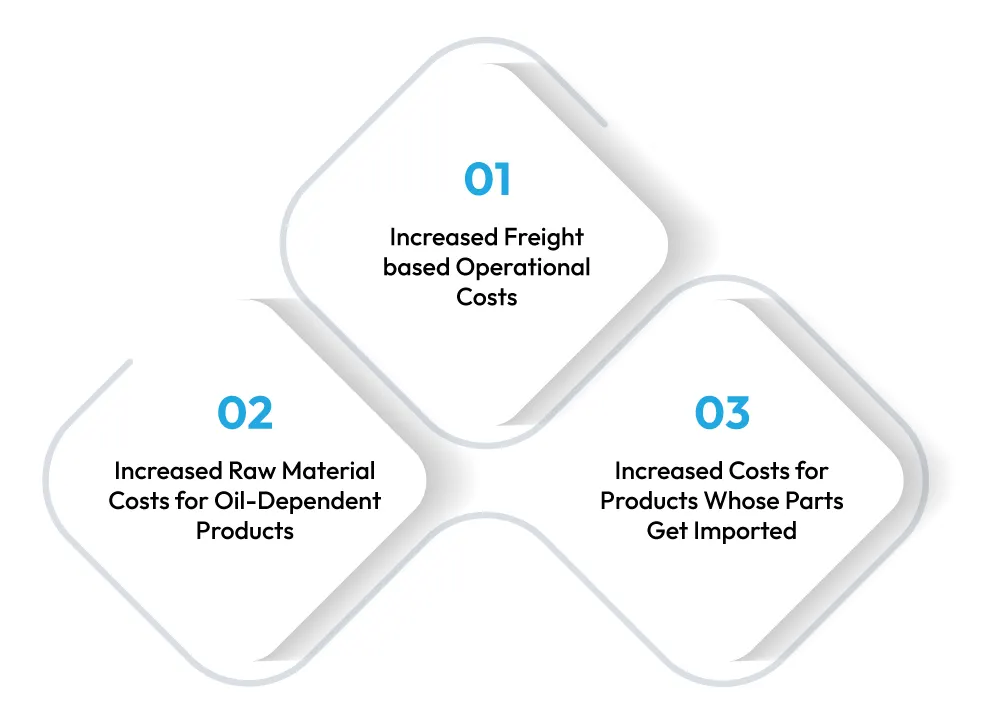
Diesel powers key freight carriers such as trucks, tractors, tempos, and more. All goods from production units, warehouses, and distribution units reach different states, locations, and retail stores via freight transport. Freight consumes diesel, and therefore fuel price increases put more burden on businesses in terms of freight costs.
“The persistent geopolitical tensions that drove up commodity prices and freight/logistics costs, and volatile energy prices, will remain key determinants of India Inc’s profitability.” Akansha Behnde Senior Economist, CareEdge Ratings (Source: ETV Bharat)
This price is partially borne by all involved, from manufacturers to retailers and finally the end consumers.
Raw material costs increase when oil is a major raw material itself required to produce goods. Industries that use oil as a direct input, such as paints, textiles, footwear, and automotive coatings, see raw material costs rise directly with crude prices. This makes the finished goods costly. When this price is passed on to consumers, many price-sensitive customers may avoid buying or look for cheap alternatives.
Other sectors like electronics have components assembled from other countries and so have to bear more transport costs. The parts of ACs, watches, mobile phones, laptops, etc, come from global suppliers. They may be assembled in India. Now, with international increases in fuel prices, businesses that assemble products in India have to shell out more money to procure these goods from global suppliers. This means direct margin loss.
For logistics, transport, e-commerce, and delivery-based business models such as food delivery businesses, grocery delivery businesses, and on-demand services such as cabs, the fuel price increase is a direct blow to profitability.
When freight prices rise, manufacturers have limited options. They must either absorb the higher costs and accept reduced margins or pass a portion of the increase on to distributors. Distributors, in turn, may pass these additional costs on to wholesalers and retailers. This creates a ripple effect across all businesses. Retailers then pass the same to end consumers.
For manufacturers running their own retail outlets, the impact is greater. They have to bear both the price shocks. One is the increased costs of raw materials, and the other is the transport costs of carrying their finished goods to their retail stores.
Retailers, wholesalers, distributors, and manufacturers cannot control fuel prices. What they can control is how efficiently they run their business and save operational costs other than the fuel-related ones. Fuel-based freight and transport are not the only operational cost. Businesses spend on a lot of other things to keep their business running. From billing staff and POS machines to accountants and inventory managers, every aspect of operation has a cost.
So, if your freight-related costs are between 10-40%, you still have 60-90% of other operational costs where you can save money and mitigate the losses caused by higher fuel prices. In many cases, you can save more than you are currently spending, including the fuel costs.
How? By implementing smart technology that consolidates everything, eliminates bottlenecks, reduces staff working hours, minimizes resource use, and gets you more customers. With AI-powered business management software, you can smartly save costs associated with inventory management, accounting, customer marketing, promotions, and billing. Let’s see how smart technology such as AI-powered business management software helps mitigate the increased margin pressures due to higher fuel prices.
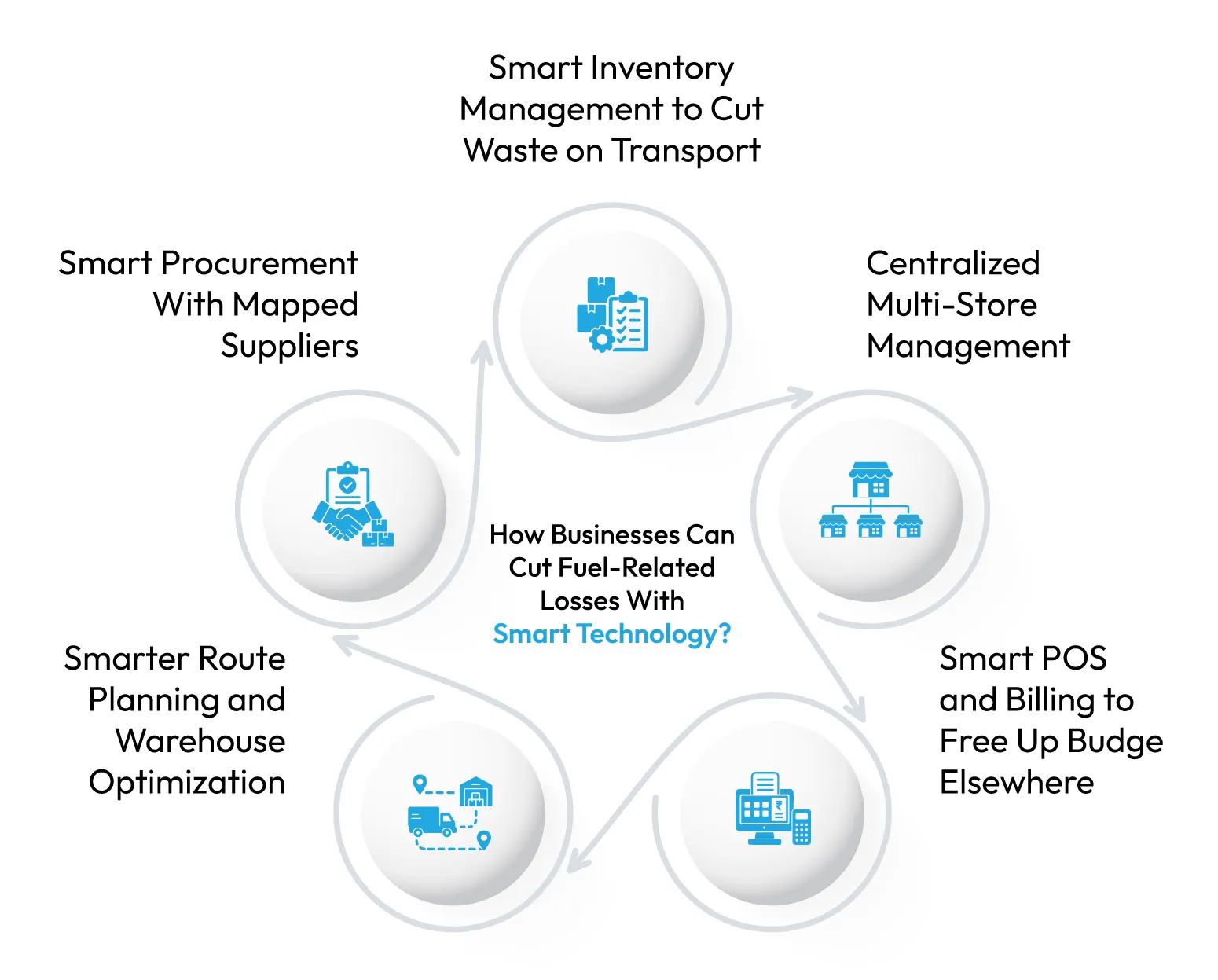
Your retail store stock comes via transport. However, a lot of extra transportation costs are associated with inventory that was ordered and transported to your retail store but is not selling at all. How to prevent this? An AI-powered business management system has a built-in inventory management system that tells you about your best- and least-selling stock items. This means your transportation costs can be saved if you use all the trucking space to accommodate only the best-selling items.
Over-stocking itself costs a huge amount of losses in terms of stock holding costs, spoilage, expired items, and wastage. With a smart inventory management system that analyzes your POS system sales and, based on it, can tell you exactly which inventory to buy and in what quantity to save excess inventory costs, you are saving a lot of money. Demand-based reordering reduces freight costs significantly.
Centralized multi-store management can also help save a lot of transportation costs. How? Suppose you have 10 stores across locations and you get a centralized view of all their POS and inventory data. You know exactly which items sell more or less at all your stores. So, if one stock is running low at a store, rather than reordering the same from a supplier, you can consider a stock request from your own store where this item is not selling. You get two benefits here:
The adverse margin effects of fuel-related increases in operational costs can be minimized by cutting costs somewhere else. One such major operational expense is billing and POS. A slow billing counter means more staff expense and poor customer experience. With a POS system that has AI-powered weight integration, image-based billing, barcode scanning software, fast multi-payment methods, mPOS, and a self-checkout system too, you can reduce the billing queues and free up staff hours.
Savings right? Also, with GST-compliant billing and automated e-invoicing also reduce the compliance errors that lead to regulatory penalties.
Manual route planning and manual warehouse layout can increase transport and warehouse space costs. Poor routes and driver planning cause wasted fuel and driver costs. AI-powered business software can also analyze your key supply routes and provide insights regarding the best routes to save fuel costs and driver expenses.
Warehouse optimization is another feature of business management software that helps you plan the space in the warehouse for inventory based on FIFO, LIFO, and weighted average principles. Efficient use of warehouse space saves costs and also makes it easier for loading and transporting stocks when needed.
What if your AI-powered business management software tells you which supplier is the best for a particular item that you need in terms of quality, price, and delivery distance? When you can map the best supplier for a particular product based on previous procurement transactions, it saves costs of procuring stocks. This saving can also help you keep your overall profit margins stable and negate the adverse effect of fuel price increases.
While businesses cannot directly control the fuel prices that are mainly driven by the international markets and OPEC decisions, businesses can take proactive steps to find savings elsewhere in their operational costs. Businesses that treat fuel price increases as a one-time shock are likely to face the same pressure again at the next revision. Smart business management software won’t bring fuel prices down, but it can surely help businesses cut costs in other operations.

Retail business inventory refers to furnished goods or ...
June 19, 2024
GST Update 2025 revolutionizes taxation with only two s...
September 5, 2025

September 3, 2026

September 2, 2026

August 21, 2026

August 18, 2026

July 30, 2026