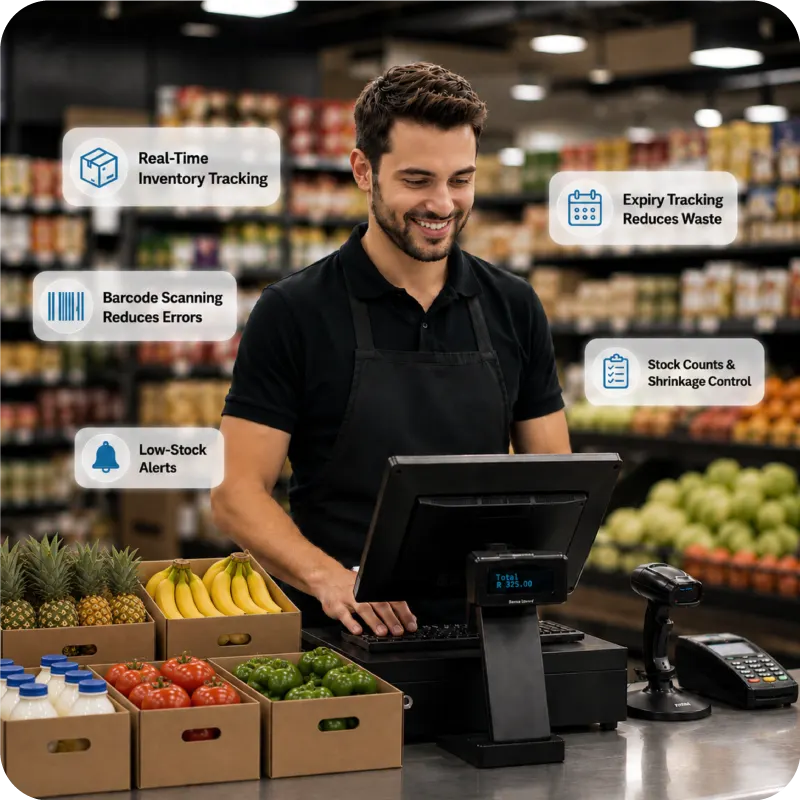
Quick Summary:
To run a liquor store in South Africa, you need to operate under and adhere to a very strict set of legal guidelines. Most generic retail POS systems were not designed to meet these specific needs. This guide compares the five best POS software options for liquor stores operating in South Africa.
This blog will help you understand the following:
- Why liquor stores in South Africa need specialised POS software.
- A side-by-side comparison of the top five options.
- The key features, pros, and cons of each platform.
- What to look for when evaluating a liquor store POS system.
- How to choose the right fit for your specific operation.
Generic POS systems can handle the basic compliance needs that most businesses require. They can issue a SARS-compliant invoice, charge the correct VAT rate, and keep records for five years.
In the case of liquor stores, however, the regulatory environment is a lot more complex and unforgiving and hence needs specialised POS software.
This gap between what a standard retail POS can do and what a South African liquor store actually needs is the reason this guide exists. It compares the five best POS software options available to South African liquor stores in 2026.
Why Specialized POS Software for Liquor Stores is Important in South Africa?
For liquor stores operating across South Africa, compliance is a lot more complex than the standard retail compliance framework, and so are their operational needs. Here is why specialised point of sale for liquor stores matters.
1. Age Verification is Mandatory
Under the Liquor Act 59 of 2003, selling alcohol to a minor is an offence that can result in the cancellation of a license. This is why these businesses need a point of sale system that prompts staff to verify age at the moment of sale and does not allow a transaction to complete without that confirmation being recorded.
2. Their Inventory is Complex
Liquor stores deal with a large number of SKUs across spirits, wine, beer, cider, and mixers. Each of them comes in multiple pack sizes and is priced differently. Point of sale for liquor stores is built to handle this level of complexity.
3. Pricing is Complicated
In South Africa, suppliers change the prices of liquor frequently. Liquor stores need a POS system that can make these updates in real-time. They also need to account for scenarios such as deposits and the impact on pricing due to breakage.
4. Multi-Store Operations are Common in This Industry
Many liquor store owners operate multiple locations. As a result, they need specialised software that provides centralised inventory management and real-time visibility across all stores.
5. Load Shedding Impacts Operations
Load shedding is the final variable that a liquor store POS addresses. A checkout that stops functioning when the power goes out is not an acceptable operational reality in the South African context.
The best POS software for a liquor store in South Africa can process sales offline and sync data automatically on reconnection.
Intresting Fact South Africa is facing a massive crisis of illegal alcohol trade, which is now a R25.1-billion industry. Specialized wine store POS systems can help traders maintain supplier records to verify the authenticity of their goods during audits.
Source:DailyMaverick
Comparing The Best 5 Liquor Store POS Systems At a Glance
| Software | Best For | Pricing |
|---|---|---|
|
Vasy |
SA liquor stores that need a full ERP integration with offline capability. |
Contact for pricing. |
|
Bottle POS |
Single and multi-location liquor stores. |
Contact for pricing. |
|
KORONA POS |
Multi-location liquor retailers and wine stores |
Starts from R980 per month. |
|
mPower Beverage |
Independent and chain liquor stores with complex inventory |
Contact for pricing. |
|
Lightspeed Retail |
Mid-to-large liquor and wine store POS systems with e-commerce integration. |
Starts from R1454 per month. |
Top 5 Liquor Store POS Software For South Africa
Not every POS system works for every liquor store. With that in mind, we have narrowed down the list to the following five solutions to cover the full spectrum of what liquor stores in South Africa would require.
1. Vasy
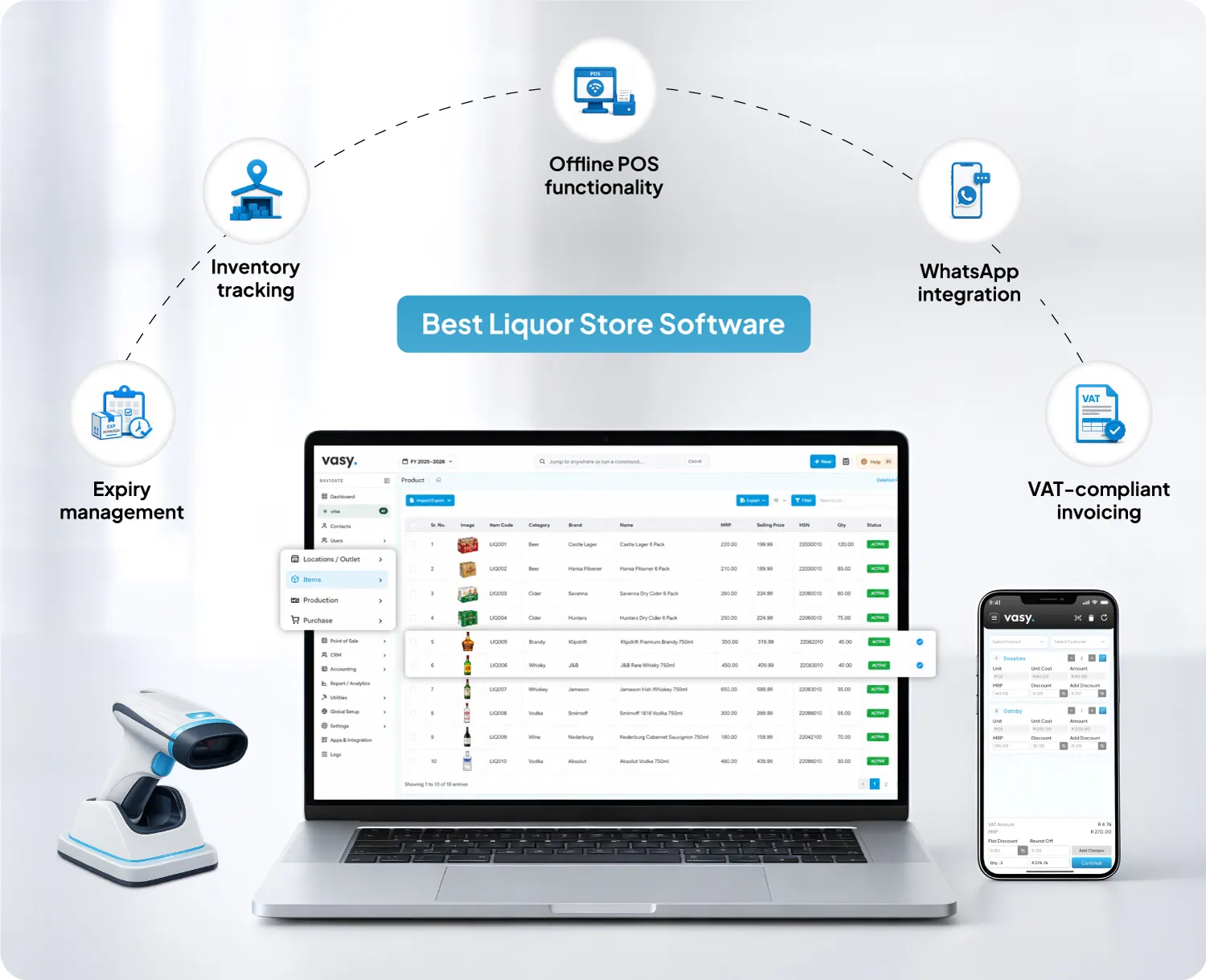
Vasy is a cloud-based ecosystem and is integrated with the best POS system for a liquor store. Being designed specifically for the South African market, it comes built in with all the standard SARS VAT compliance requirements.
For liquor stores specifically, in line with Liquor Act 59 of 2003, the POS prompts for the customer’s age at the point of sale. This ensures no transaction can be completed without confirming the customer meets the legal minimum age.
From an operational perspective, the system supports multiple units of measure, so you can track inventory in bottles, cases, liters, or millilitres. When pricing changes across variants, the update can be applied simultaneously across all pack sizes from a single action, rather than editing each variant individually.
It also includes a B2B portal for wholesale customers to place orders and check stock availability.
Key Features
- Age verification prompt at the point of sale, which is legally required under the Liquor Act 59 of 2003.
- Batch tracking with manufacturing and expiry dates.
- Multi-unit inventory management (bottles, cases, liters).
- Real-time inventory tracking across multiple store locations.
- Offline POS mode with automatic data sync on reconnection.
- A loyalty programme with WhatsApp and SMS integration for customer engagement.
Pros
- All-in-one system replaces multiple tools.
- Handles compliance requirements automatically.
- Full ERP integration means sales, stock, purchasing, and accounts all update from the same transaction.
Cons
- Designed primarily for liquor retail and distribution and is less suited to on-consumption venues like bars or restaurants.
Pricing
Contact for pricing.
2. Bottle POS
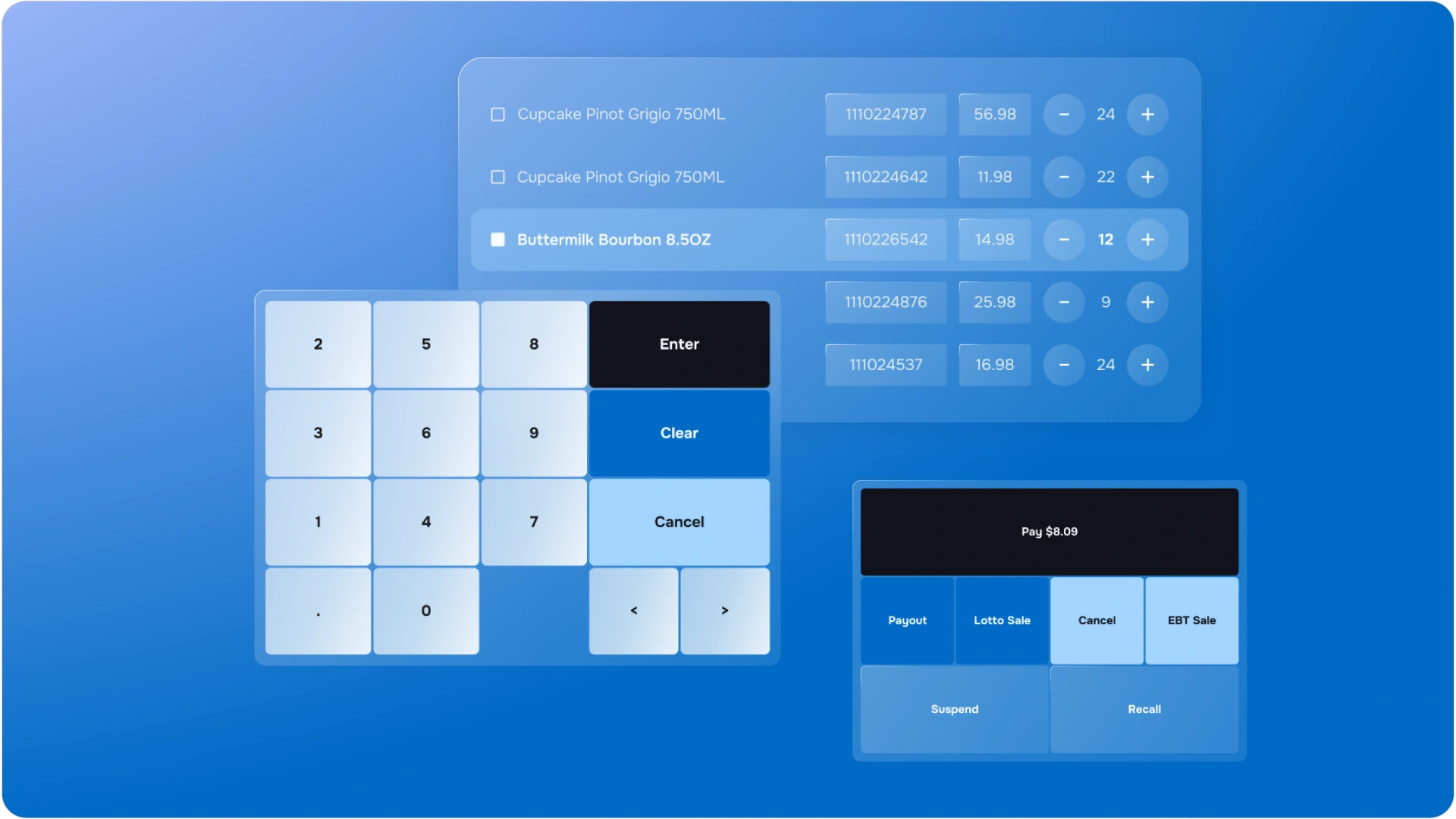
Bottle POS is a US-based POS system built exclusively for package stores and liquor retailers. What makes Bottle POS unique is its AI-powered approach. The system includes AI assistants that automate inventory management, invoice processing, and customer engagement.
It automatically ranks your inventory from A to D based on sales data so that you know which brands sell fast and which don’t. The platform also includes built-in age verification tools and is compatible with electronic ID scanners.
Key Features
- AI-powered inventory ranking (A-D system).
- AI invoice reading and automated receiving
- Dual pricing to offset credit card fees.
- Electronic ID scanner integration for age verification.
- E-commerce integration with BottleZoo, its in-house online store solution.
Pros
- Purpose-built for liquor retail.
- AI automation reduces manual work.
- 30-day money-back guarantee.
Cons
- Limited local support in South Africa.
- Some features are US-centric.
Pricing
Contact for pricing.
3. KORONA POS
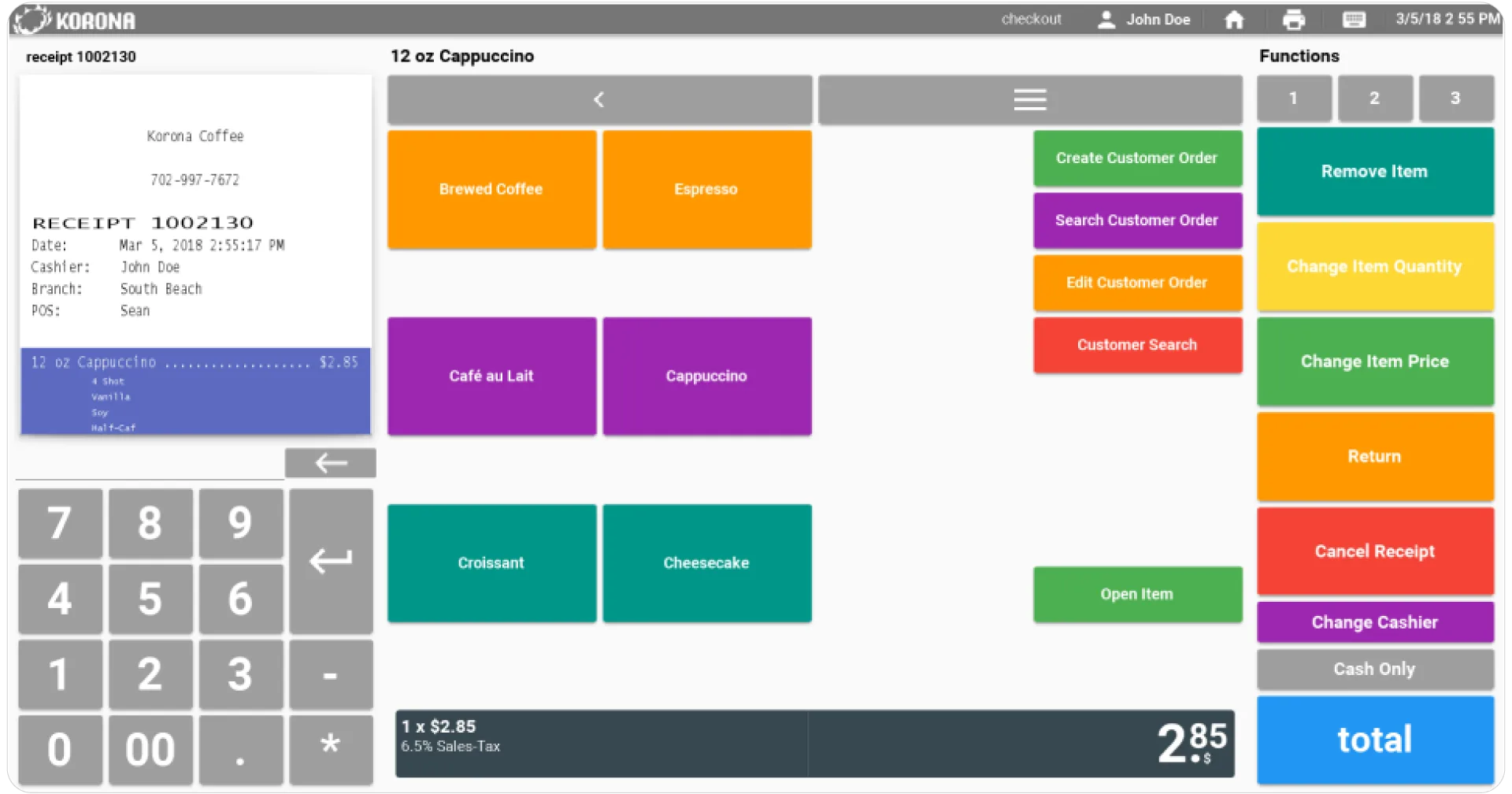
KORONA POS is another top liquor store POS system that is cloud-based and supports liquor stores, wineries, and a range of other retail categories. It, like the others on the list, comes built-in with age verification prompts, detailed inventory management, loss prevention tools, franchise and multi-location support, and a loyalty program.
What sets KORONA apart is its pricing model. There are no hidden fees, no long-term contracts, and no forced credit card processing agreements. You pay a flat monthly fee per terminal, and you can customise the system to fit your specific needs.
Key Features
- Age verification prompt integrated into the checkout workflow.
- Advanced loss prevention with cashier-level activity monitoring.
- Inventory tracking and real-time reporting.
- Cellar management.
- Franchise and multi-location management from a central dashboard.
Pros
- Transparent pricing with no hidden fees and no forced contracts.
- Modular pricing allows businesses to pay only for the features they use.
- Highly customisable for different business types.
Cons
- The support team is based in the USA.
- Hardware must be sourced separately.
- Not built for SA compliance out of the box.
Pricing
Starts from R980 per month.
4. mPower Beverage
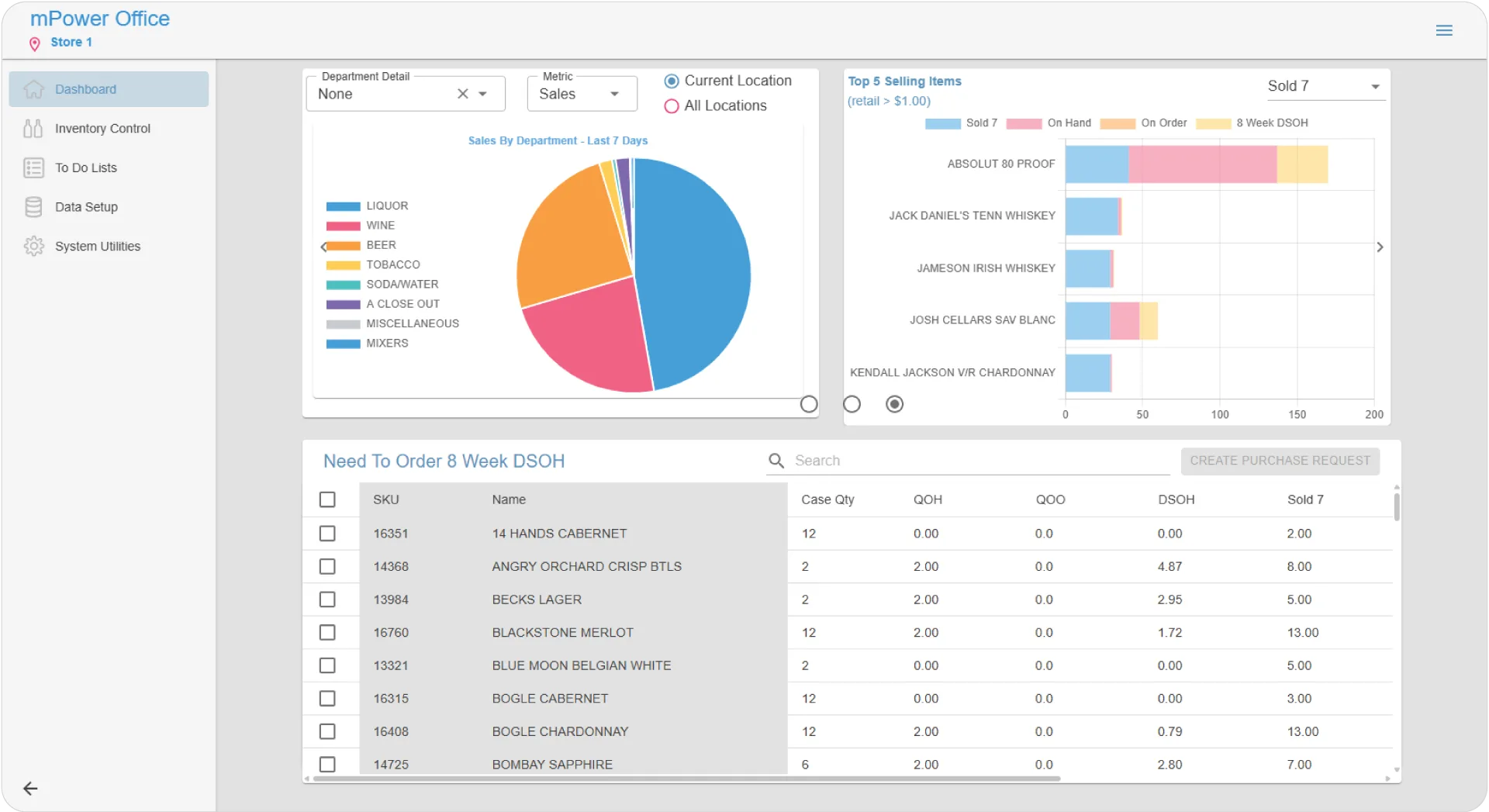
mPower Beverage is another strong contender for a wine store POS system. The company has over 15 years of experience in beverage retail. What makes mPower unique is its human-centric approach, where store owners can describe reorder rules in plain language, and the system executes them automatically.
For multi-store operators, mPower provides centralised inventory visibility. You see on-hand, on-order, and in-transit inventory for every SKU at every location on one screen. The system also supports inter-store transfers with full tracking and quantity verification at both ends.
Key Features
- AI-driven inventory management with natural language rule setting
- Built-in age verification and compliance tools for off-premise liquor retail.
- Low stock, margin, and dead stock alerts.
- Gift basket management with inventory tracking.
- Case management (single/six-pack/case).
Pros
- The most liquor-specific AI inventory capability on this list.
- US-based human support team known for responsiveness.
- Excellent for multi-location operations.
Cons
- Limited presence in South Africa.
- SARS compliance and SA payment integrations are not supported out of the box.
Pricing
Contact for pricing details.
5. Lightspeed Retail
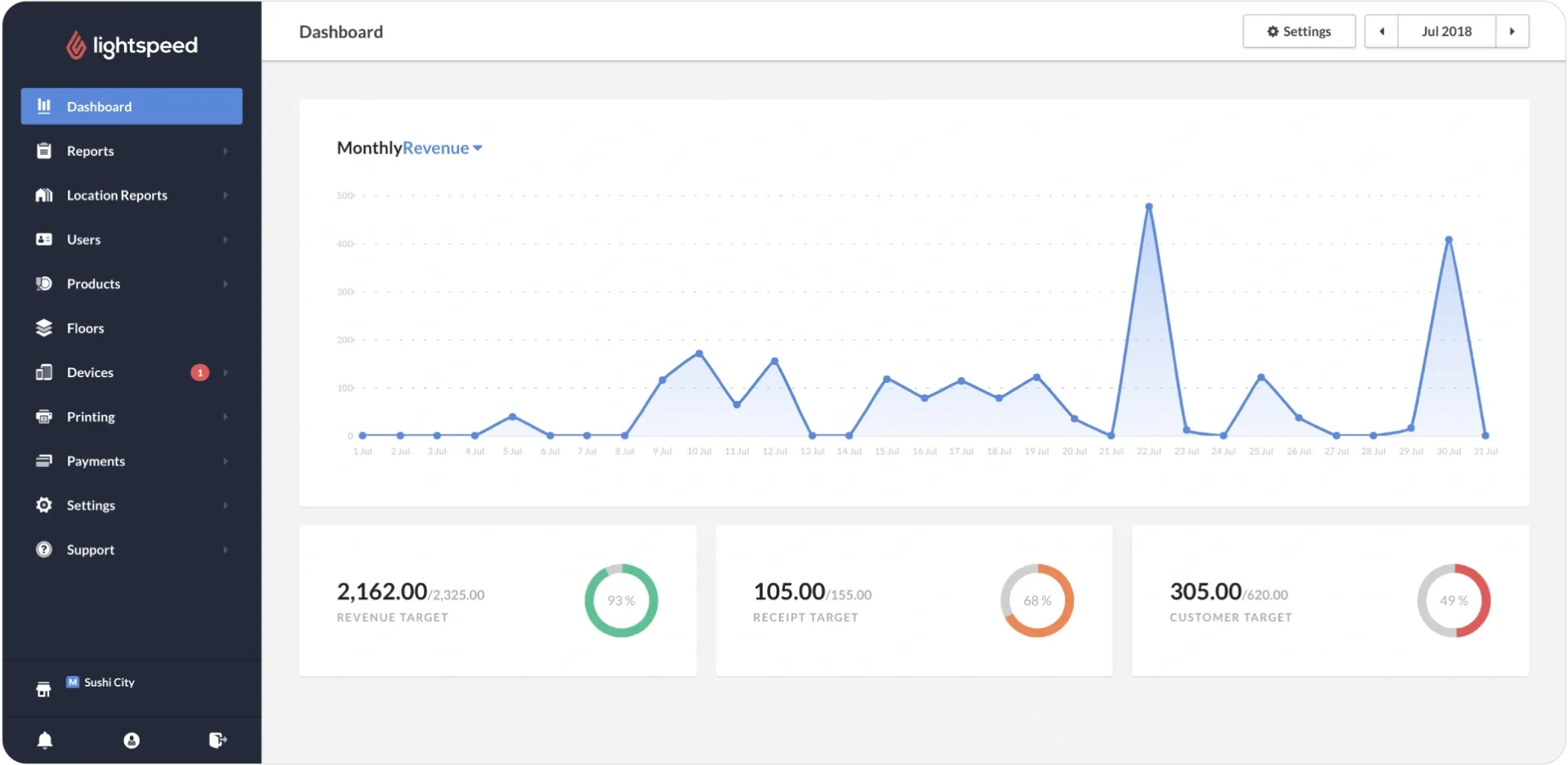
Lightspeed Retail is one of the best POS software options for liquor stores globally. In South Africa, it is deployed via ThinnPro, a certified local implementation partner. It supports liquor stores, wine stores, and a wide range of other retail categories with strong inventory management, e-commerce integration, age verification prompts, and multi-location management.
Lightspeed’s preloaded product catalogue of over 8 million items is a practical advantage for liquor stores setting up a new system, reducing the manual effort of building a product master from scratch. The system also includes powerful forecasting tools and real-time insights.
Key Features
- Extensive inventory management with case-break pricing.
- Vendor management and ordering automation.
- E-commerce integration and omnichannel selling.
- Barcode scanning and employee management.
- Open API for custom integrations.
Pros
- Global platform with a strong ecosystem.
- Preloaded product catalogue with 8 million+ items reduces setup time.
- Robust e-commerce and omnichannel capabilities for wine store POS systems.
Cons
- Higher pricing than specialised liquor POS systems.
- Advanced reporting requires higher-tier plans at additional cost.
Pricing
Starts from R1454 per month.
What to Look for in Liquor POS Software?
When evaluating any point of sale for liquor stores, these essential features should be present:
1. Age Verification
The system must actively prompt staff to verify a customer’s age before completing a sale. This is a legal requirement under the Liquor Act 59 of 2003. A POS without this will expose your store to the possibility of losing your license.
2. SARS VAT Compliance
Every sale must generate a SARS-compliant tax invoice with the correct VAT rate applied per product. It should also be capable of generating reports for excise duties, VAT, and local liquor board requirements, which come into play during audits.
3. Product Variant Management
A single spirit label may be sold in 375ml, 750ml, and 1.75L sizes, each with a different price. The POS must manage these as separate inventory units under a common product record, with the ability to update pricing across all variants simultaneously.
4. Offline Capability
A point of sale for liquor stores that stops working during a power outage is a significant operational liability in the South African context. Offline mode with automatic sync on reconnection should be a non-negotiable requirement.
5. Multi-Location Inventory
If you operate multiple stores, your POS must provide centralised inventory visibility and inter-store transfer capabilities.
6. Local Support
When a compliance issue or system failure occurs, you need a support team that understands the South African regulatory environment and can respond quickly.
How to Choose the Best POS Software for Your Liquor Store?
Knowing how to evaluate POSs in practice is what separates a good shortlist from the right decision. Here is how to go about it:
- Step 1: Start with a live compliance demo: Ask the vendor to walk through an age verification prompt and generate a SARS-compliant VAT invoice during the demo itself. If they cannot show you both in a live environment, move on.
- Step 2: Match the platform to your inventory complexity: Check if the platform can handle your current inventory complexity and volumes as they are today and based on how your business is projected to grow.
- Step 3: Test offline mode under real conditions: Do not accept a vendor’s description of how offline mode works. Ask them to simulate a connectivity outage during the demo and show you exactly what the cashier sees, what transactions look like, and how data syncs on reconnection.
- Step 4: Ask a directed question about support: Who picks up the phone at 5 pm on a Friday when your system goes down mid-trade? If the answer routes to an international support queue with no local context, factor that into your decision.
- Step 5: Model the cost over at least two years: Implementation, hardware, onboarding, and ongoing support costs differ significantly between platforms. Calculate how much the implementation will cost you in the long run.
Summing it Up
Choosing the best POS software for your liquor store is one of the most important decisions you will make. Each of the 5 solutions covered in this guide has strengths.
That said, some are built exclusively for international markets, so make sure to verify if they satisfy the regulatory environment, operational challenges, and compliance requirements of South Africa while evaluating them.
Of the five options compared here, Vasy is the only platform designed specifically for South African retail conditions. It handles VAT compliance, multi-location inventory, and age verification and integrates POS with accounting, inventory, and CRM in one platform.
If you want to see how Vasy handles the specific requirements of your liquor store, book a 30-minute demo with our team. We’ll walk you through age verification, stock management, and VAT reporting for your actual setup.
FAQs Regarding Liquor Store POS Software
The best POS software depends on your store's size and needs. Vasy is built for the South African market with local compliance features. Bottle POS offers AI-powered automation. Evaluate each option against your specific requirements.
Generic POS systems lack liquor-specific features like age verification, case-break pricing, multi-unit inventory, and excise compliance. They cannot handle the complexity of liquor retail operations.
Yes. Systems like Vasy, mPower Beverage, and Lightspeed Retail offer centralised inventory management across multiple locations. You can see on-hand, on-order, and in-transit inventory for every SKU at every store.
US-based liquor POS systems can process transactions, but they typically lack SARS VAT compliance, local payment gateway integrations, and South African regulatory compliance features out of the box.
Last Updated on August 17, 2026